Pathway to Pro - An Interview With Top UK Player Seb "Numlocked" Barton
Author
NSE
09/10/2018
Becoming in a professional player in one genre is hard, but to do it in two takes something really special. Seb “Numlocked” Barton is a career professional gamer from Devon who has achieved just that. He’s been kind enough to share some of his insights with us to help you take things to the next level.
Seb is currently a free agent having spent a year with the LA Valiant Overwatch League team and was one of only two UK players drafted to a team for the first season. Prior to that he played for Oyun Hizmetleri in the League of Legends Turkish Pro League and had a long career as one of the best Team Fortress 2 players in history.
Hi Seb, thanks for taking the time, why don’t you start by telling us a little but about the journey that led you to becoming a pro player?
No worries!
The first ever game I played was probably something on a console, either the Small Soldiers game based on the film or FIFA99. Then I got my first laptop and played a lot of Digital Paintball 2, which was your basic FPS deathmatch game but with paintballs. Eventually I discovered Xfire and that’s when I got into competitive gaming.
I learned about Counter Strike but, but, being the young stupid kid I was, I got Counter-Strike Condition Zero instead of 1.6 and started competing in that instead. Back in the day there was a league called Enemy Down which was like your basic register online grassroots competition. You’d find a group to play with and then compete in rookie tournaments. That got the ball rolling for me. I went from game to game, mostly competing in most shooters, and that’s what got me to the stage I’m at now.
That’s really interesting, was there any logic to how you chose the games you played?
It was always quite natural, mostly just seeing what people play on Xfire. I’d made lots of friends over the months and years; I’d see what they were playing and be like ‘’that game sounds cool, I’ll try it out’’.
The Xfire client, founded in 2002 and acquired by Viacom in 2006 for $102 million.
So when did you first realise that you could make the jump from amateur to professional play?
I don’t think I ever thought of myself as being that good at Counter-Strike; I thought I was decent but never thought like ‘’oh wow, I could be the best at something’’. Counter-Strike was fun and it’s where I discovered my love of competitive gaming – the first league I participated in, the first LAN I attended, etc, but there was no major realisation that it was something I could do professionally for years to come. That changed when I started competing in Team Fortress 2; I found myself at the top and realised that I could pursue other games professionally if I approached them in the same way that I’d approached Team Fortress 2.
So you’d credit your transition from amateur to professional to a change in attitude?
Yeah absolutely.
Instead of playing just for the sake of playing, or playing specifically because we had a tournament or weekend event coming up, I decided to play consistently and turn up for everything. Then I said “okay, I have these videos of my recent games and these videos of my opponent’s recent games, I’m going to watch them, see how they play, and be ready to counter when it comes up”. I also watched a lot from my own point of view to see what kind of mistakes I was making and tackle them head on.
You’ve spoken about FPS games being you bread and butter, but you played League of Legends at a very high level, how did that come about?
Yeah the league transition was interesting – I don’t really know – I think that a lot of my friends were playing it at the time. I’d try to make them play games and, if that didn’t work, I’d just play whatever they were playing – that’s what happened with League of Legends.
At first I hated it, I didn’t like it at all! I was very much FPS only. I’d been playing TF2 at a high level for five years at this point but I said “okay, let’s give League a chance”. I wasn’t very good at first but I applied the work ethic I’d developed in Team Fortress 2 and just kept going until I got to fairly high levels.
I think I was Diamond 3 when I started looking for my first team. I made a Reddit post along the lines of: “hey I’m this player, I’ve been doing this for Youtube for a while, I’ve played Team Fortress 2 and Counter Strike competitively and want to find a team with similar goals to me”. It sort of snowballed from there, eventually and I found myself pushing higher ranks and ultimately reaching Challenger.
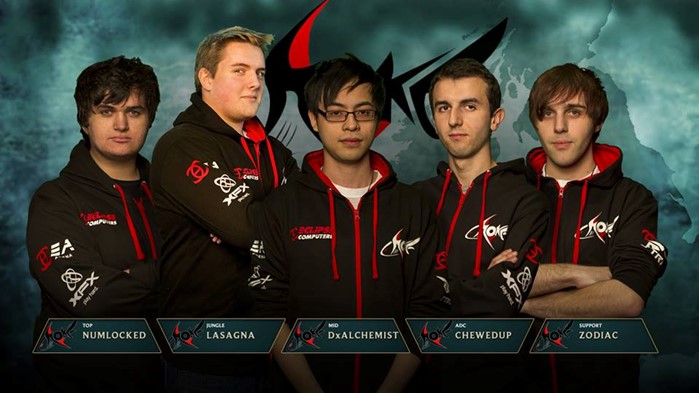
Seb with Choke Gaming ahead of their Four Nations win in 2014
There aren’t many players who could reach such a high level in multiple genres, were you able to transition any skills from Team Fortress 2 to League of Legends?
Honestly, not so much. Definitely not in a mechanical sense. The big thing that helped me – and this is true in every game I’ve played – was the way I lead in game and how vocal I am as a player. I think being vocal is a really important skill to have regardless of the game you play. If you can effectively communicate what you’re trying to do, and what you would like your team to do, and what you think the enemy is going to do, then you’re much more likely to succeed.
Seb showing off his communication skills in Team Fortress 2
Obviously you’re all about Overwatch now, how did the move back to FPS games come about?
As soon as Overwatch came out, I said “this is basically TF2 and this is a game that I have to succeed in”. It was an instant realisation and I knew that if I was ever going to make the big time, if I was ever going to be the best player at a game, then it was going to be for Overwatch.
I immediately got in contact with the people I’d last played Team Fortress 2 with and said “hey guys, this game is coming out and it looks like it’s right up our street – we should all give it a go”. I’d been playing League of Legends in Turkey, so it had been a while, but there was no hesitation about it. I got in contact with one of the Blizzard community reps and said “hey, we’re so and so from Team Fortress 2 and we like the look of Overwatch, can we get a Beta key?” They were very supportive and quickly gave us keys.
We started scrimming just like Team Fortress 2 and got talking with other teams; it kind of just went from there! You could easily tell the people who were interested in grinding, the people that didn’t care too much, and the people that were capable of adapting to a new game.
And how did you then go from there to playing for LA Valiant?
I worked hard with the early teams I played on and always stuck it out. I think I only played with three teams before Overwatch League? My last team before LA Valiant, NRG, were US based and I was lucky to get lots of exposure to the North American scene. As soon as my time with NRG ended, I was able to spend some time playing for a Contenders team proving my worth again. That was really important for me.
Fascinating – so you’ve played for some serious professional teams, what have been some of the biggest challenges of going full-time?
I think the most obvious challenge is being away from friends and family for so long. Throughout my career I’ve had to travel a lot – living with teammates, travelling for tournaments, etc. I’ve actually spent longer living outside the UK than I have in it over the course of my career. Being away from friends and family is a super hard and can feel lonely.
What about your teammates, do you form strong personal friendships or does it feel more like a professional relationship?
I wouldn’t say they’re all friends; there are certainly some players that I’ve developed strong friendships with and still talk to this day, but they aren’t always friendships you’d develop organically if you didn’t have your professional career.
What about the positives?
The big positive is almost the flipside of the big negative: being able to travel. Not many people can say they’ve been to the places I’ve been to, or lived where I’ve lived. A lot of people spend the majority of their life living in the country they were born in. I’m very lucky in that I’ve been able to experience so much so early in my life.
That’s great – so of all the places your career has taken you, which has been you favourite?
I would say Turkey, I really enjoyed Turkey – it’s not a country I thought I would visit, but living there for half a year was great and I enjoyed Turkish culture.
And were there any big challenges specifically transitioning from high level play to professional?
I think the big thing that most amateur players transitioning to professional teams don’t like having to do all the media stuff. As I’ve grown older, and having done this for so long, it’s something I don’t mind as much anymore. When you first get into it, it’s kind of like “do I really have to do this sort of thing?”
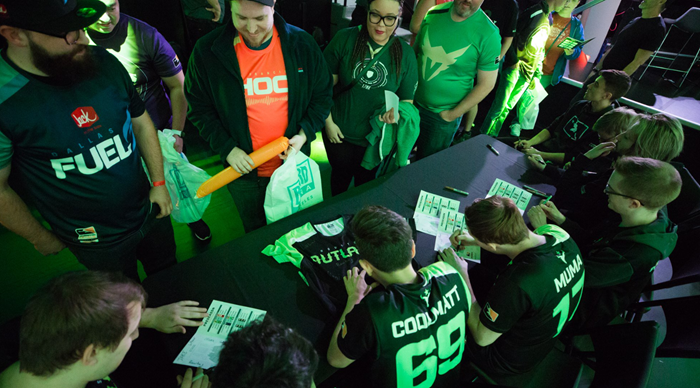
Houston Outlaws signing session during Overwatch League Season 1 (Twitter, Blizzard Entertainment)
What advice would you offer aspiring professional players at university?
Don’t put all your eggs in one basket and don’t focus entirely on becoming a professional player. Your career outside gaming is important because becoming a professional play isn’t going to happen for everybody.
That sounds cheesy, but there’s an in-game reason for it. You need to be happy to play at your best and you can’t do that if you’re worrying what’s going to happen to you if you don’t make it. Don’t give up if you think you have what it takes, but strike the right balance.
Have you thought about what your career might look like after you retire from professional play?
Yeh, quite a lot actually. I don’t want to leave the esports industry. I’d like to transition into a coaching role or perhaps team management at a later date. Coaching for me would be the best transitional role because it’s something I’ve always been doing on the side in League of Legends, Overwatch, and Team Fortress 2. I do a lot of private one-on-one coaching sessions and it’s something I know I can continue to do after my playing career ends whether it be in a one-on-one setting or working with a professional team. Perhaps not as a head coach, I’d want to start in assistant coaching role to really get to grips with it and then go from there – I think that would be the best for me.
So what’s next for Seb? My experience with LA Valiant wasn’t quite what I’d anticipated, there were a lot of internal challenges and I didn’t get to prove myself. Unfortunately that’s just the reality of playing for a professional team. Over the next year I know I’ll have to create my own opportunities to show that I’m still a top player and I’m happy to do that because I’ve done it before. Expect to see me in Contenders and we’ll go from there!
Thanks Seb, that’s great, best of luck in the future!
The BUEC 2025 Winter season is over! 113 universities have joined the fight to be crowned Esports University of the Year, though we'll see who that is by the end of Spring 2026. Check out how your university performed!
5 comments
Monster Plays - Winter 2025 - Week 8 Vote
The eighth week of Winter's Monster Plays have been submitted, so get voting now for your favourite.
Pot Noodle Society of the Month - November 2025 - University of Liverpool
University of Liverpool have been selected as the Pot Noodle Society of the Month for November for their incredibly active month, with events from Worlds watch parties to Comic Con trips.
The second day of the BUEC Winter Finals kicks off tomorrow, following an amazing start with matches in Rainbow Six Siege, Overwatch 2, and League of Legends. Get ready for more thrilling action including VALORANT, CS2 and Marvel Rivals.
The BUEC Winter Finals are kicking off today with Rainbow Six Siege X, Overwatch 2 and League of Legends but don't forget we have a tonne of action with some great matchups throughout the entire weekend!